The impact of weather conditions II: Atmospheric pressure

In the previous article, we analysed the longitudinal impact of wind on a vehicle. Now, it’s time to focus on another environmental factor that has a major effect on performance: atmospheric pressure.
Atmospheric pressure is directly relationed with the altitude. It is of common knowledge that if you climb a really high mountain, there is less pressure and as a consequence less oxygen.
This happens because the pressure has a direct impact on another key parameter: air density. The equation that defines the air density is the following:

Being:
ρ : air density
P: atmospheric pressure
T: air temperature
R: universal gas constant
To simplify the explanation we have not taken into account humidity.
So common knowledge is correct, the higher you are on earth in terms of altitude, the less oxygen is available, due to the air pressure being lower hence the density is decreased as well. But how does air density affect performance?
The Mexican track Autódromo Hermanos Rodríguez is well known for its high altitude. Every year in Formula 1, there is extensive discussion about its impact on engine performance—but are engines the only systems affected?
Let’s take a closer look.
Test methodology
To carry out this study, two simulations were performed at the Red Bull Ring:
- One using environmental conditions from Baku City Circuit (sea level).
- One using conditions from the Mexican circuit (2230 m).

The simulations were conducted using a naturally aspirated engine, as the impact of air density is significantly larger compared to turbocharged engines. Turbo behaviour will be discussed later.
We kept the air temperature constant during the test, to observe only the effect of the air pressure on the air density. The table below summarises the conditions used.

The difference in air density between both scenarios is 26%.
Simulation results
The results of the simulations are shown below:
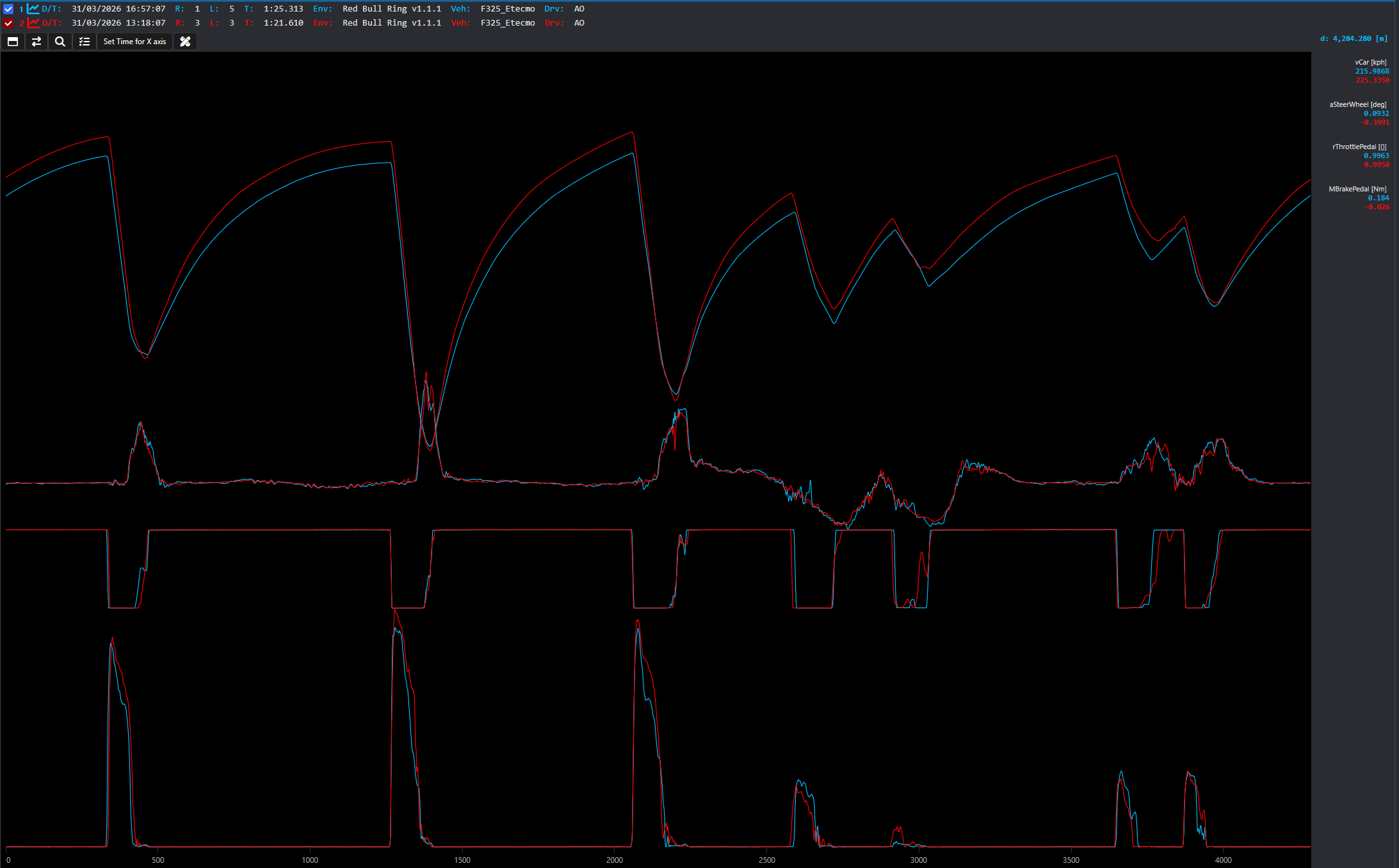
The lap time difference is 3.7 seconds in favour of Baku simulation. As observed in the time–distance plots, the performance gap is not limited to the straights—it is also evident in the high-speed corners of the Red Bull Ring.
To properly analyse the results, we will divide the study into two main areas:
- Engine performance
- Aerodynamics
Engine performance
As shown in the results, the difference in top speed between both simulations is significant, with the Baku scenario achieving 12 km/h more than the Mexico scenario. This is directly related to the amount of oxygen entering the engine cylinders.
Engines are designed to operate at high volumetric efficiency, meaning that the intake volume and compression ratio are optimised and effectively fixed.
So what happens when air density changes?

While the volume of air entering the cylinder remains constant, the mass of air (and therefore oxygen, the reactive element in combustion) varies according to density. Higher density results in a greater mass of air entering the cylinder.
As a consequence:
- More fuel is injected to maintain the lambda (air–fuel ratio).
- More power is generated.
To quantify this effect, standard correction models are used.

In this study, the EEC standard was applied, resulting in an expected power reduction of 22.5% under lower density conditions.
This reduction affects the entire RPM range. Plotting the power curves confirms a consistent 22.5% decrease across all engine speeds.

Although temperature was kept constant in these simulations, it is important to note that:
- A decrease in air temperature (at constant pressure) increases density
- This results in higher power output and increased fuel consumption in naturally aspirated engines, take it into account when calculating your fuel-in!
What about turbocharged engines?
In turbocharged engines, intake air is compressed before entering the cylinder, allowing the engine to compensate for lower ambient pressure.
However, at high altitudes:
- The turbocharger must operate at significantly higher rotational speeds.Mechanical limits may be reached.
- Efficiency may drop if operating outside the optimal compressor map.For the Baku vs Mexico comparison:
- Expected power loss is approximately 6–10%*.
- Compared to 22.5% in a naturally aspirated engine.
*This value depends on turbocharger design and operating limits.
Aerodynamics
Engine performance is only part of the story.
As observed in the results, cornering speeds are also higher in the Baku simulation.
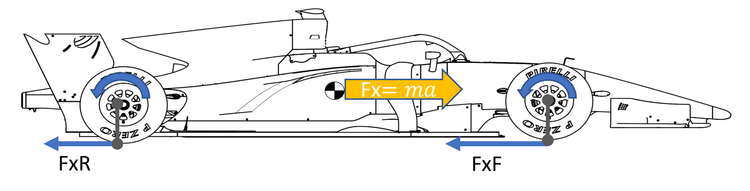
As discussed in the previous article, aerodynamic forces are directly proportional to air density:

A 26% reduction in air density therefore results in:
- ~26% reduction in downforce.
- ~26% reduction in drag.
This means that when we spoke about the impact on engine performance, those 12kmh extra from the engine, were actually more, as they compensated the drag increase with higher densities. To be able to quantify more we have prepared a simulation in which only the aerodynamics effects are taken into account, which would be the case of an electric vehicle like a Formula E.
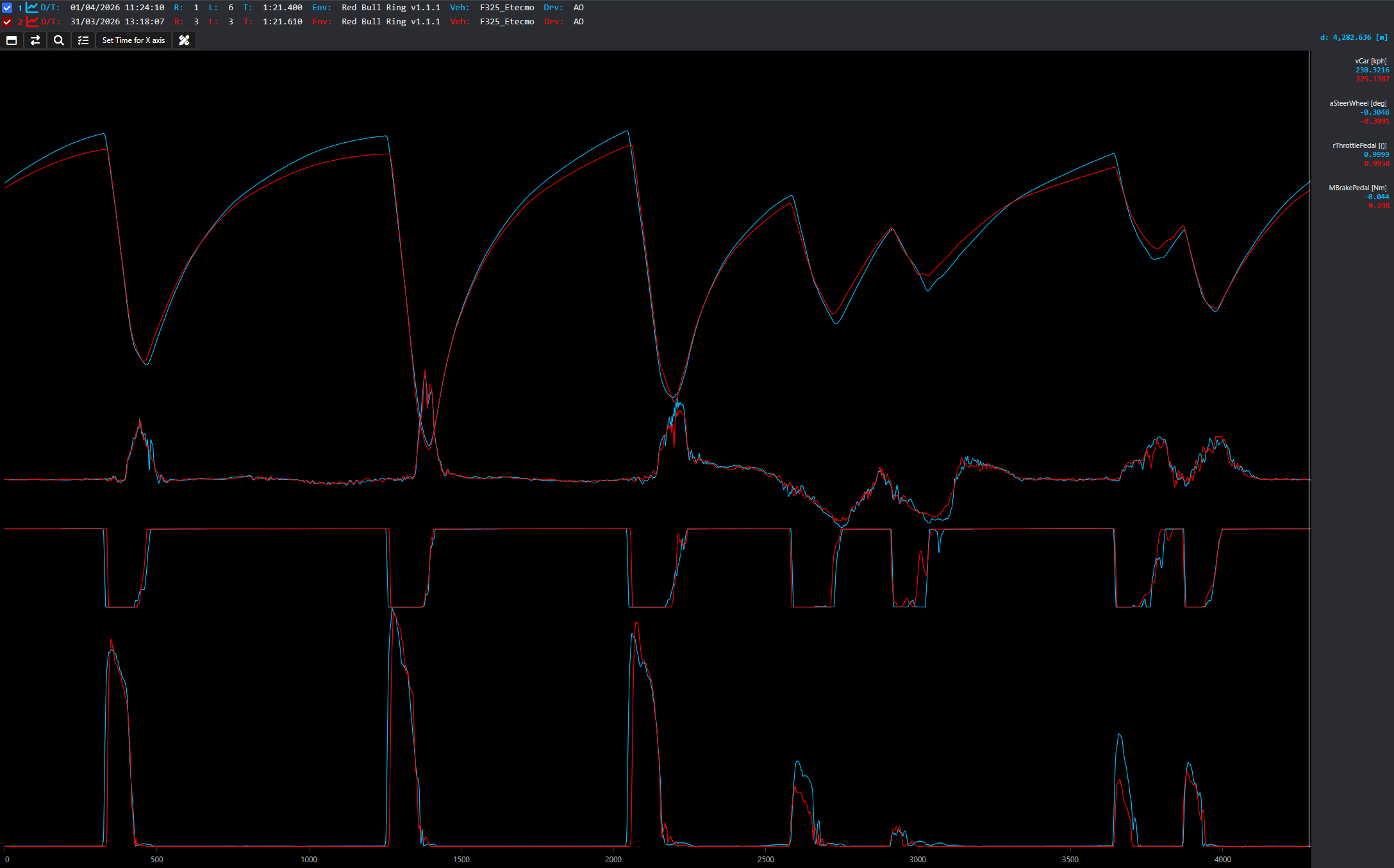
As a result:
- Lap time differences become negligible in Red Bull Ring, but it will be really track dependent; in tracks with long straights and slow speed corners, lower air density should be quicker.
- Top speed is 9 km/h higher with lower density due to reduced drag.
- Minimum speed in fast corners is 10kmh with higher density.
To keep putting on the table numbers to validate this simulation, we need to check what's the downforce difference between both scenarios.
In order to achieve this downforce vs speed was plotted using an XY graph, ensuring consistent comparison across conditions.

The results closely match expectations of a 26% difference, though not perfectly. This discrepancy is due to dynamic ride height effects.
Reduced downforce leads to a higher ride height, which will again affect the downforce levels.
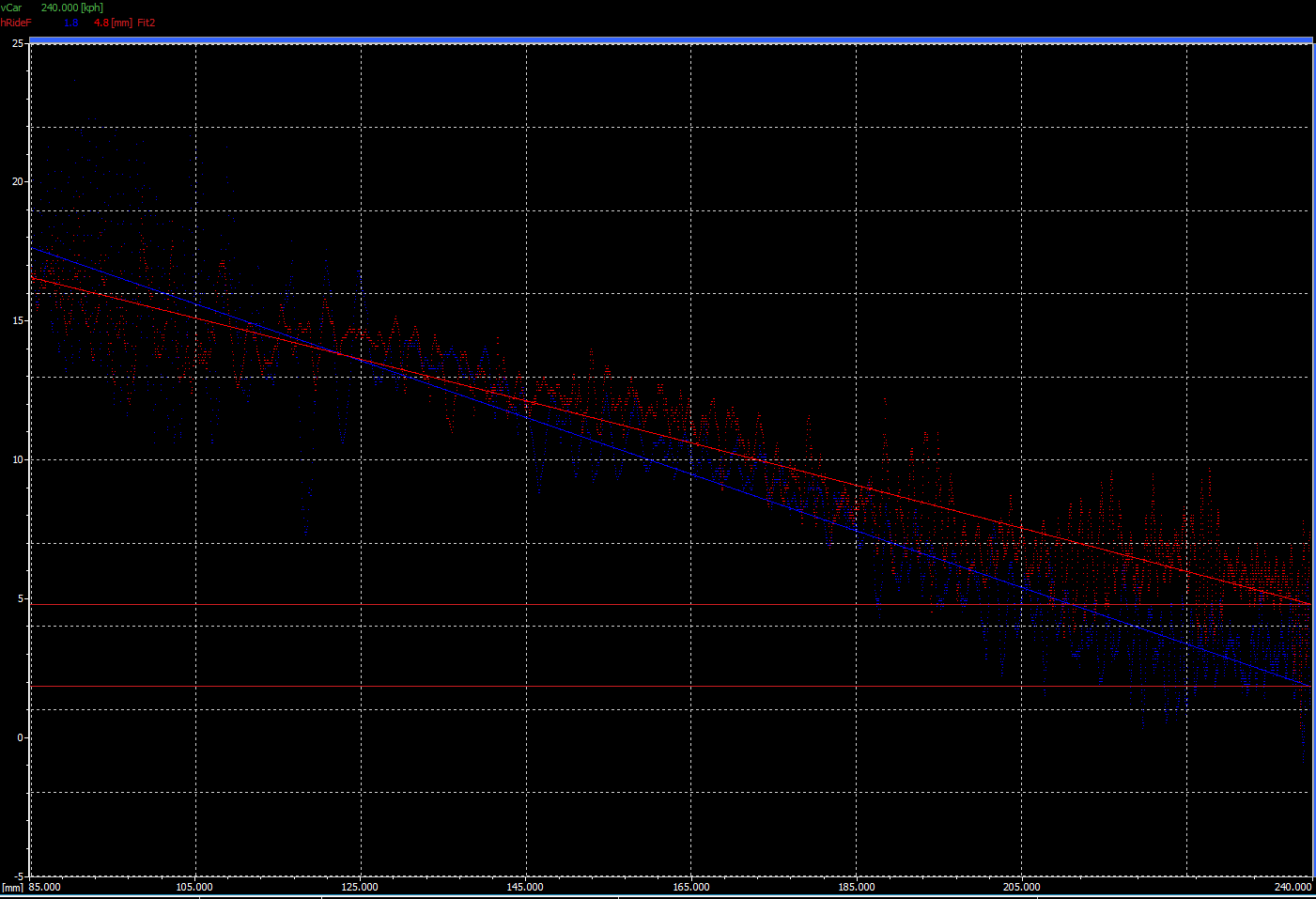
The difference reaches up to 3 mm at the end of the straight, vital information when defining vehicle setup.
Additionally:
- Higher air density allows later braking, due to both lower entry speed and increased aerodynamic efficiency.
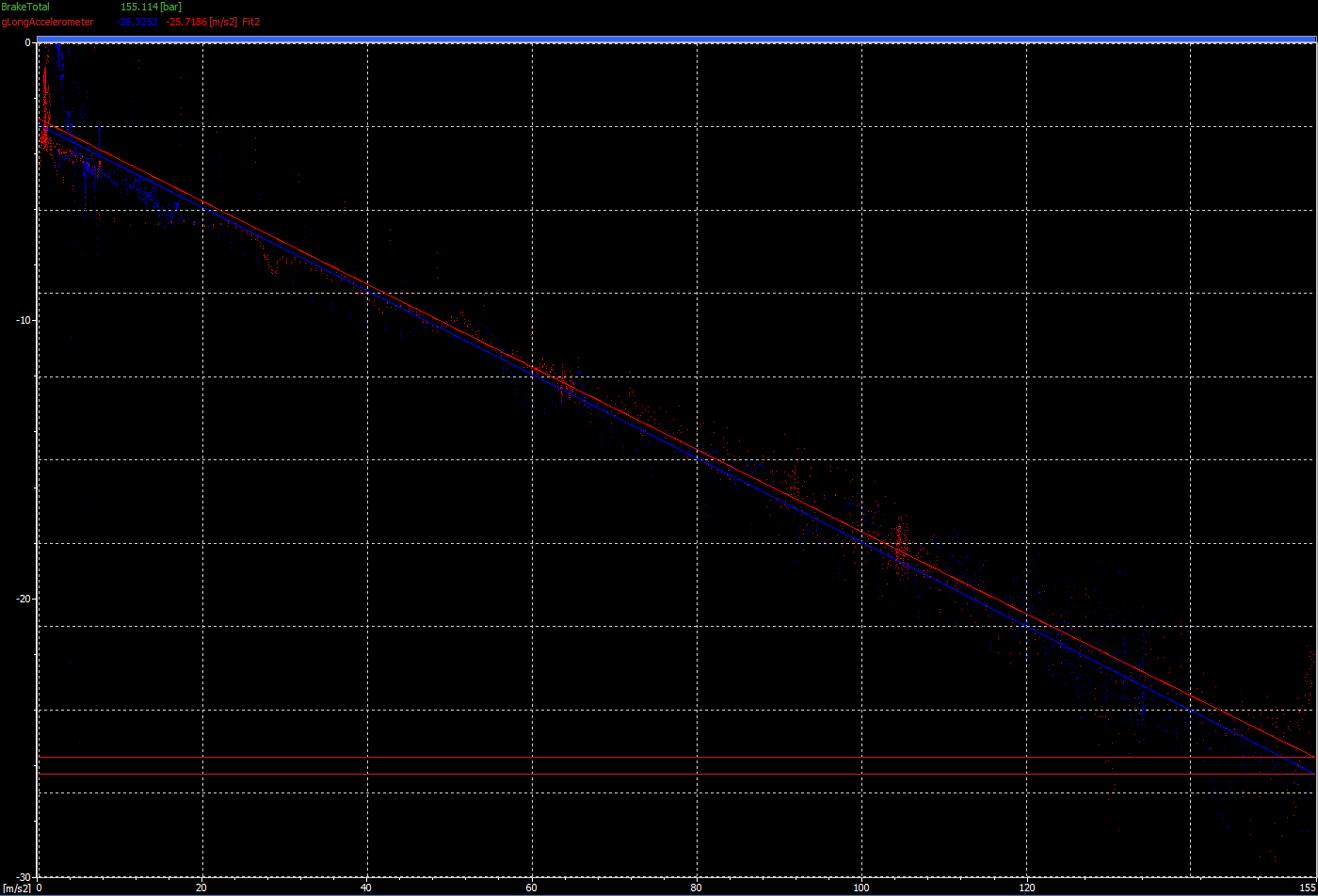
In the chart above we can observe how the simulation with higher air density achieves 0.05 G's more when both using 155 bar of brake pressure due to the increase in drag.
Conclusions
Air pressure is a critical parameter that must be considered when preparing a vehicle for track testing, as its impact in air density is direct.
Key takeaways:
- Engine performance is highly sensitive to air density, especially in naturally aspirated engines.
- Aerodynamic forces scale directly with density, affecting both drag and downforce.
- The impact on straight-line speed is dominated by engine effects rather than drag. We saw a decrease in straight-line speed of 9 km/h with higher air density, but when taking into account the engine effects it was 12 km/h quicker. That means that the impact on the engine performance alone is of 21 km/h.
Liked this article? Have a look at the previous one about the wind!
 Antonio Ortiz Poveda